


İçindekiler Tablosu
Application scope for surface treated titanium dioxide
Surface Treated Titanium Dioxide needs an application-specific evaluation in waterborne steel primers. This article focuses on grade screening, with particular attention to flocculation and flash rust confusion. The first decision is whether a candidate belongs in the trial at all. Define the application requirements, identify the material properties that might affect them, and use a controlled comparison to reject unsuitable options before a production run.
A white waterborne steel primer needs enough coverage to support the coating system without disrupting adhesion, drying or corrosion-control performance. Titanium dioxide supplies opacity, while other ingredients normally carry much of the anticorrosive function. Keep those roles distinct. A whiter primer is not automatically a more protective primer. The test program should assess appearance together with the binder and anticorrosive pigment package on correctly prepared metal.
Bu uygulamada malzemenin nasıl davrandığı
Waterborne stability depends on the interaction between pigment surfaces, dispersants, binder particles and dissolved species. Water quality and pH can therefore change a trial even when the TiO2 lot remains constant. Some anticorrosive ingredients add further interactions. Record the complete formulation rather than comparing two unidentified white slurries. A satisfactory fresh grind is only the first checkpoint, since stability can change after binder addition or storage.
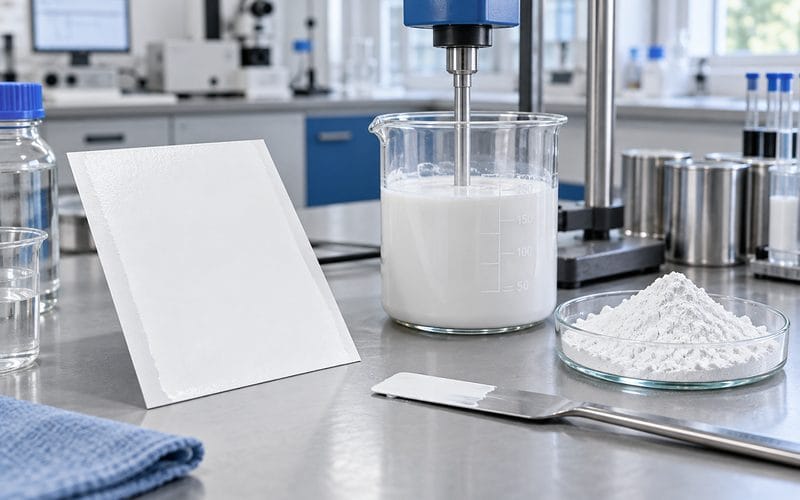
Use one water source and measure its relevant quality parameters according to the plant procedure. Prepare the grind with fixed addition order and energy, then introduce the binder and anticorrosive components consistently. Measure pH and viscosity after equilibration. Apply to the same cleaned steel and include contrast cards for opacity. Record drying conditions, particularly humidity and temperature, because they influence water removal and the early metal interface.
Define the surface treated titanium dioxide application brief
A useful surface treated titanium dioxide inquiry starts with the job the material must do in waterborne steel primers. State the required primer hiding, the intended processing route and the consequence of failure. Describe the actual substrate or polymer, binder or carrier, thickness and exposure. Include the current control material if its identity can be shared. This helps the supplier propose a relevant grade rather than the whitest or least expensive powder in the catalogue.
Separate non-negotiable requirements from properties that can be optimized. For example, a material that meets the appearance target but fails dispersion stability should not advance simply because it is easy to disperse. Write the screening gates in the order in which they will be tested. The surface treated titanium dioxide decision becomes more efficient when an early failure stops an unsuitable candidate before costly downstream work.
Check surface treated titanium dioxide technical documents
For surface treated titanium dioxide, ask for a current technical data sheet, safety data sheet and lot-specific certificate where available. Check the grade name, crystal form, treatment, units and method behind each reported value. A specification limit and a typical value have different meanings. A measured lot result describes that lot under the supplier’s method. None of these documents alone demonstrates performance in waterborne steel primers.
Do not compare numbers with different sample preparation or measurement bases as though they were interchangeable. Ask how whiteness, volatile content or particle-related values are obtained when those parameters matter to the screen. If an application claim lacks conditions, turn it into a question for the trial. This is especially useful for surface treated titanium dioxide, where the same chemical identity can cover grades intended for very different industrial functions.
A discolored metal panel can show flash rust, pigment flocculation or contamination. Compare the affected coating with a drawdown on an inert substrate. If the color defect appears only on metal, investigate substrate preparation and the waterborne primer chemistry. If it also appears on the card, examine dispersion and formulation stability. This simple separation prevents a pigment replacement from becoming the default response to every white-primer complaint.
Compare surface treated titanium dioxide on controlled bases
Start the surface treated titanium dioxide experiment with a controlled baseline that preserves water quality and binder pH. Compare candidates on a documented pigment-volume or active-material basis as appropriate to the application. This identifies the initial material difference. Then prepare a second series with a justified application adjustment, such as dispersant level or addition route. Label the two stages separately so that formulation optimization is not confused with intrinsic grade performance.
Keep an accepted production material in each test series. Make at least repeat specimens and, for an important supply decision, assess representative lot variation. Randomize the evaluation order where practical and keep the observer unaware of candidate identity during visual comparisons. A surface treated titanium dioxide selection based on one unusually favorable panel or part offers less protection than a repeatable result against a stable control.
Record surface treated titanium dioxide screening evidence
The comparison table below is a framework for surface treated titanium dioxide screening rather than a set of invented test results. Populate it with the actual measurements from waterborne steel primers. Record both the result and the method, including the conditioning state. If a value is missing, leave it unavailable instead of treating it as zero or a pass. A useful shortlist shows why each candidate advanced or stopped.
Review the balance among primer hiding, dispersion stability and adhesion after conditioning. A single headline number can conceal a practical limitation. Where a tradeoff is acceptable, document who owns the application requirement and the permitted margin. The surface treated titanium dioxide purchase decision should follow the complete specification rather than an informal preference for one attractive sample.
Compare hiding at equal dry thickness, then verify adhesion and the specified protective tests on the complete primer system. Do not use TiO2 loading as a substitute for adequate anticorrosive design. If a candidate requires more dispersant, confirm the effect on water sensitivity and storage behavior. Cost comparisons should include the acceptable application weight and production stability, not only pigment price per kilogram.
Set surface treated titanium dioxide acceptance limits
Use the existing product specification and the control’s normal variation to define the trial limits. Do not invent universal pass values for surface treated titanium dioxide. Consider measurement repeatability, specimen variation and the consequences of a marginal result. If the laboratory method cannot resolve the observed difference, repeat or improve the measurement before ranking the candidates. Preserve raw observations as well as summary values.
For waterborne steel primers, an acceptance result should identify the recipe, equipment, specimen geometry and conditioning. State whether the candidate is approved for a laboratory stage, pilot run or routine production. These are different decisions. A successful surface treated titanium dioxide bench screen supports the next trial stage, while production approval requires evidence that the relevant operating window is also acceptable.
Specify the approved surface treated titanium dioxide supply
Before ordering surface treated titanium dioxide, agree the exact grade, packaging, lot identification and documents supplied with each shipment. Identify material or process changes that require notification and a new application check. Retain a sealed sample from the approved trial and define an appropriate storage and replacement practice. A sample that changes during uncontrolled storage is a weak future reference.
The screening report for waterborne steel primers should finish with a short recommendation, the unresolved questions and the next authorized test. Record delivered-cost assumptions only when the quotations and logistics basis are available. A qualified surface treated titanium dioxide candidate can still be commercially unsuitable, while an attractive quotation cannot resolve a failed technical requirement. Keep both parts of the decision traceable.
Başvuru kanıtlarını karşılaştırın
Use this surface treated titanium dioxide table to organize the grade screening results for waterborne steel primers. The entries describe what to measure. They are not supplier test data or universal acceptance limits.
| Karar maddesi | Kontrollü karşılaştırma | Kaydedilecek kanıtlar |
|---|---|---|
| primer hiding | water quality held constant | Yöntem, numune geometrisi, sonuç ve tekrar değişimi |
| dispersion stability | binder pH documented | Kararlaştırılan yöntemi kullanarak ilk ve koşullandırılmış sonuçlar |
| adhesion after conditioning | anticorrosive pigment package controlled | Gözlemlenen kusurlar ve ilgili uygulama ölçümü |
| Aktif malzeme temeli | Eşit hacimli veya belgelenmiş kütle esası | Gerçek TiO2 katkısı, taşıyıcı veya bağlayıcı katkısı |
| Süreç marjı | substrate preparation recorded | Kararlı çalışma sonucu ve gerekçelendirilmiş varyasyon |
| Serbest bırakma kararı | Grade Screening in waterborne steel primers | Uygulama spesifikasyonundan geçiş sınırları; çözülmemiş öğeler açık kalır |
Doğru Longtai derecesini tartışın
LTR-909 is described as a universal surface-treated rutile grade and can be discussed as a primer screening candidate. Give Longtai the binder type, waterborne environment and anticorrosive pigment package. Request compatibility guidance and samples, then establish performance in the actual recipe. The TiO2 data sheet does not provide a corrosion rating for the finished primer. Keep the approved formulation and test conditions attached to the purchase decision.
For surface treated titanium dioxide, review the LTR-909 product information ve the titanyum dioksit ürün yelpazesi. Mevcut spesifikasyonu tedarikçi ile onaylayın. Genel bir arka plan referansı için bkz Vikipedi'nin titanyum dioksit genel bakış. Bu referans, tedarikçinin sınıf spesifikasyonundan ayrıdır ve burada açıklanan uygulamaya uygunluk sağlamaz.
Pratik bir karar kontrol listesi
The following surface treated titanium dioxide checklist concentrates the next action on waterborne steel primers. Keep the completed checklist with the specimen identities and test record.
- Name the exact waterborne steel primers formulation and the intended use.
- Check water quality and binder pH before comparing candidate samples.
- Prioritize primer hiding without dropping dispersion stability.
- Investigate any sign of flocculation and flash rust confusion before a production order.
- Yalnızca belgelenmiş uygulama kapılarından geçen materyali ilerletin.
Uygulama odaklı bir örnek inceleme isteyin
To discuss surface treated titanium dioxide for waterborne steel primers, send Longtai the formulation category, target primer hiding, current flocculation and flash rust confusion concern, planned consumption and trial conditions. Ask for the current LTR-909 documentation and a representative sample. Use the Longtai iletişim sayfası veya başvuruyu açıklamak için aşağıdaki sorgulama formu Örnek tartışma, kendi sürecinizdeki sonuçlara dayalı olarak onay ile, tanımlanmış bir teste yol açmalıdır.
Sıkça Sorulan Sorular
What should the surface treated titanium dioxide grade screening trial measure first?
Prioritize primer hiding, then confirm dispersion stability and adhesion after conditioning. For surface treated titanium dioxide, a strong isolated number cannot compensate for failure of the complete waterborne steel primers specification. Record the method, specimen and conditioning so the comparison can be repeated.
How should the surface treated titanium dioxide addition level be determined?
The useful level depends on the active-material basis, water quality and the finished-product geometry. Establish surface treated titanium dioxide loading with a controlled series and confirm the process margin. A concentrate addition percentage must be converted to its actual TiO2 contribution before comparing recipes.
What evidence helps explain flocculation and flash rust confusion?
Preserve failed and accepted specimens, review binder pH and anticorrosive pigment package, and run a controlled exchange or repeat comparison. A surface treated titanium dioxide investigation should show whether the result follows the material, formulation or process. Confirm the correction against the original failure condition.
How should LTR-909 be qualified for this application?
The product listing makes it a candidate for discussion. Request current documents and verify the actual formulation and process. The surface treated titanium dioxide decision must rely on representative application evidence, with any certification or end-use compliance considered separately for the complete product.
What records should support the approved surface treated titanium dioxide grade?
Save the exact grade and lot, formulation revision, active-material basis, processing conditions, specimens and acceptance results. For waterborne steel primers, include the observations for primer hiding and flocculation and flash rust confusion. These records support future surface treated titanium dioxide lot comparisons and change control.