


Table of Contents
Application scope for titanium dioxide for wood coatings
Titanium Dioxide For Wood Coatings needs an application-specific evaluation in waterborne white furniture coatings. This article focuses on grade screening, with particular attention to grain telegraphing and poor leveling. The first decision is whether a candidate belongs in the trial at all. Define the application requirements, identify the material properties that might affect them, and use a controlled comparison to reject unsuitable options before a production run.
White furniture coatings must cover a naturally variable substrate while preserving the specified feel and finish. Wood grain, extractives, sealer absorption and sanding can all influence the visible result. Evaluate titanium dioxide on a controlled test surface first, then confirm performance on representative wood. A brighter pigment cannot compensate for poor substrate preparation. Separate the optical pigment comparison from the application sequence used to manage wood variability.
How the material behaves in this application
The same pigment can appear different in a smooth drawdown and on porous wood. Penetration and uneven film build change the optical path, while surface texture changes reflected light. Binder and dispersant compatibility also affect leveling and sanding. Record the complete coating sequence, including sealer and intermediate sanding. A comparison that changes the substrate or number of coats cannot isolate pigment efficiency.
Prepare pigment concentrates under fixed conditions, then compare letdown stability in the chosen waterborne binder. Apply contrast-card films and matched wood panels using the same equipment. Record sanding grit, sealer application and drying interval. Assess the film after full conditioning rather than at touch-dry alone. Include grain coverage, edge coverage and the required sheen. Use instrumental measurements only on areas with suitable, comparable surface geometry.

Define the titanium dioxide for wood coatings application brief
A useful titanium dioxide for wood coatings inquiry starts with the job the material must do in waterborne white furniture coatings. State the required coverage over wood grain, the intended processing route and the consequence of failure. Describe the actual substrate or polymer, binder or carrier, thickness and exposure. Include the current control material if its identity can be shared. This helps the supplier propose a relevant grade rather than the whitest or least expensive powder in the catalogue.
Separate non-negotiable requirements from properties that can be optimized. For example, a material that meets the appearance target but fails surface smoothness should not advance simply because it is easy to disperse. Write the screening gates in the order in which they will be tested. The titanium dioxide for wood coatings decision becomes more efficient when an early failure stops an unsuitable candidate before costly downstream work.
Check titanium dioxide for wood coatings technical documents
For titanium dioxide for wood coatings, ask for a current technical data sheet, safety data sheet and lot-specific certificate where available. Check the grade name, crystal form, treatment, units and method behind each reported value. A specification limit and a typical value have different meanings. A measured lot result describes that lot under the supplier’s method. None of these documents alone demonstrates performance in waterborne white furniture coatings.
Do not compare numbers with different sample preparation or measurement bases as though they were interchangeable. Ask how whiteness, volatile content or particle-related values are obtained when those parameters matter to the screen. If an application claim lacks conditions, turn it into a question for the trial. This is especially useful for titanium dioxide for wood coatings, where the same chemical identity can cover grades intended for very different industrial functions.
Grain telegraphing, pinholes and brush marks may result from substrate absorption or leveling rather than insufficient white pigment. Compare sealed and unsealed panels to establish the contribution of suction. Examine whether an extra coat improves coverage simply by increasing film build. If dark discoloration develops later, investigate wood extractives and sealer effectiveness. Treat that as a different problem from neutral opacity loss on a standardized black-and-white card.
Compare titanium dioxide for wood coatings on controlled bases
Start the titanium dioxide for wood coatings experiment with a controlled baseline that preserves wood substrate and sealer. Compare candidates on a documented pigment-volume or active-material basis as appropriate to the application. This identifies the initial material difference. Then prepare a second series with a justified application adjustment, such as dispersant level or addition route. Label the two stages separately so that formulation optimization is not confused with intrinsic grade performance.
Keep an accepted production material in each test series. Make at least repeat specimens and, for an important supply decision, assess representative lot variation. Randomize the evaluation order where practical and keep the observer unaware of candidate identity during visual comparisons. A titanium dioxide for wood coatings selection based on one unusually favorable panel or part offers less protection than a repeatable result against a stable control.
Record titanium dioxide for wood coatings screening evidence
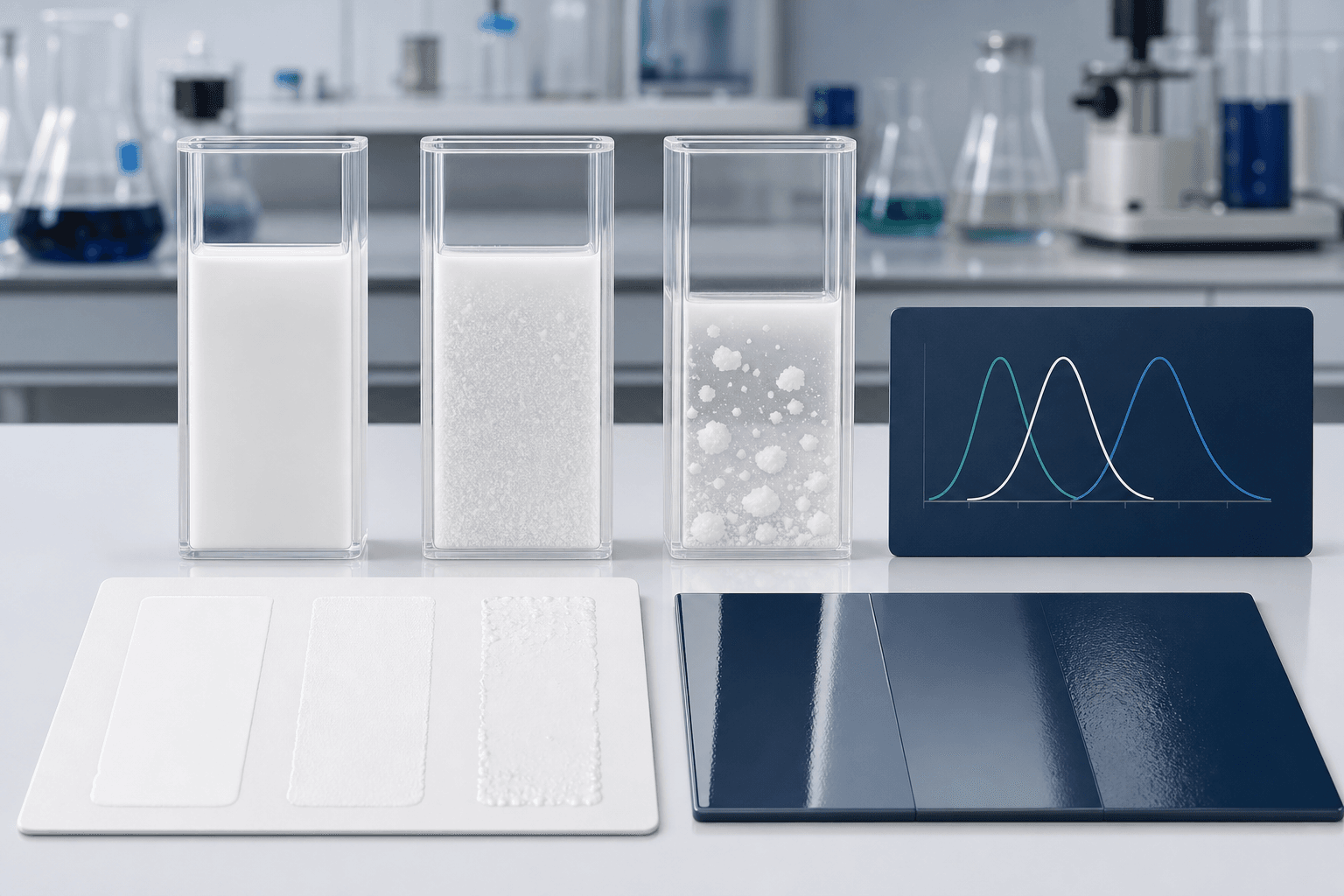
The comparison table below is a framework for titanium dioxide for wood coatings screening rather than a set of invented test results. Populate it with the actual measurements from waterborne white furniture coatings. Record both the result and the method, including the conditioning state. If a value is missing, leave it unavailable instead of treating it as zero or a pass. A useful shortlist shows why each candidate advanced or stopped.
Review the balance among coverage over wood grain, surface smoothness and blocking and sanding response. A single headline number can conceal a practical limitation. Where a tradeoff is acceptable, document who owns the application requirement and the permitted margin. The titanium dioxide for wood coatings purchase decision should follow the complete specification rather than an informal preference for one attractive sample.
A loading study should measure hiding and finish together, including any effect on sanding or blocking. Hold binder solids constant and report total dry film thickness across all coats. A formulation that covers in fewer coats may still require different drying or sanding operations. Include those operations when estimating production cost. Approve the complete finishing sequence rather than a pigment level detached from the actual furniture process.
Set titanium dioxide for wood coatings acceptance limits
Use the existing product specification and the control’s normal variation to define the trial limits. Do not invent universal pass values for titanium dioxide for wood coatings. Consider measurement repeatability, specimen variation and the consequences of a marginal result. If the laboratory method cannot resolve the observed difference, repeat or improve the measurement before ranking the candidates. Preserve raw observations as well as summary values.
For waterborne white furniture coatings, an acceptance result should identify the recipe, equipment, specimen geometry and conditioning. State whether the candidate is approved for a laboratory stage, pilot run or routine production. These are different decisions. A successful titanium dioxide for wood coatings bench screen supports the next trial stage, while production approval requires evidence that the relevant operating window is also acceptable.
Specify the approved titanium dioxide for wood coatings supply
Before ordering titanium dioxide for wood coatings, agree the exact grade, packaging, lot identification and documents supplied with each shipment. Identify material or process changes that require notification and a new application check. Retain a sealed sample from the approved trial and define an appropriate storage and replacement practice. A sample that changes during uncontrolled storage is a weak future reference.
The screening report for waterborne white furniture coatings should finish with a short recommendation, the unresolved questions and the next authorized test. Record delivered-cost assumptions only when the quotations and logistics basis are available. A qualified titanium dioxide for wood coatings candidate can still be commercially unsuitable, while an attractive quotation cannot resolve a failed technical requirement. Keep both parts of the decision traceable.
Compare the application evidence
Use this titanium dioxide for wood coatings table to organize the grade screening results for waterborne white furniture coatings. The entries describe what to measure. They are not supplier test data or universal acceptance limits.
| Decision item | Controlled comparison | Evidence to record |
|---|---|---|
| coverage over wood grain | wood substrate held constant | Method, specimen geometry, result and repeat variation |
| surface smoothness | sealer documented | Initial and conditioned results using the agreed method |
| blocking and sanding response | binder solids controlled | Observed defects and relevant application measurement |
| Active material basis | Equal-volume or documented mass basis | Actual TiO2 contribution, carrier or binder contribution |
| Process margin | application passes recorded | Stable-run result and justified variation |
| Release decision | Grade Screening in waterborne white furniture coatings | Pass limits from the application specification; unresolved items remain open |
Discuss the right Longtai grade
Longtai includes furniture coatings among the stated applications of LTR-959. Confirm the binder chemistry and intended finish before requesting a sample. Do not infer stain-blocking, furniture safety compliance or a particular sanding response from a white pigment specification. Ask for treatment information and evaluate the candidate against a retained reference recipe on the chosen sealer and wood substrates.
For titanium dioxide for wood coatings, review the LTR-959 product information and the titanium dioxide product range. Confirm the current specification with the supplier. For a general background reference, see Wikipedia’s overview of titanium dioxide. This reference is separate from the supplier’s grade specification and does not establish suitability for the application described here.
A practical decision checklist
The following titanium dioxide for wood coatings checklist concentrates the next action on waterborne white furniture coatings. Keep the completed checklist with the specimen identities and test record.
- Name the exact waterborne white furniture coatings formulation and the intended use.
- Check wood substrate and sealer before comparing candidate samples.
- Prioritize coverage over wood grain without dropping surface smoothness.
- Investigate any sign of grain telegraphing and poor leveling before a production order.
- Advance only the material that passes the documented application gates.
Request an application-focused sample review
To discuss titanium dioxide for wood coatings for waterborne white furniture coatings, send Longtai the formulation category, target coverage over wood grain, current grain telegraphing and poor leveling concern, planned consumption and trial conditions. Ask for the current LTR-959 documentation and a representative sample. Use the Longtai contact page or the inquiry form below to describe the application. The sample discussion should lead to a defined test, with approval based on the results in your own process.
Frequently Asked Questions
What should the titanium dioxide for wood coatings grade screening trial measure first?
Prioritize coverage over wood grain, then confirm surface smoothness and blocking and sanding response. For titanium dioxide for wood coatings, a strong isolated number cannot compensate for failure of the complete waterborne white furniture coatings specification. Record the method, specimen and conditioning so the comparison can be repeated.
How should the titanium dioxide for wood coatings addition level be determined?
The useful level depends on the active-material basis, wood substrate and the finished-product geometry. Establish titanium dioxide for wood coatings loading with a controlled series and confirm the process margin. A concentrate addition percentage must be converted to its actual TiO2 contribution before comparing recipes.
What evidence helps explain grain telegraphing and poor leveling?
Preserve failed and accepted specimens, review sealer and binder solids, and run a controlled exchange or repeat comparison. A titanium dioxide for wood coatings investigation should show whether the result follows the material, formulation or process. Confirm the correction against the original failure condition.
How should LTR-959 be qualified for this application?
The product listing makes it a candidate for discussion. Request current documents and verify the actual formulation and process. The titanium dioxide for wood coatings decision must rely on representative application evidence, with any certification or end-use compliance considered separately for the complete product.
What records should support the approved titanium dioxide for wood coatings grade?
Save the exact grade and lot, formulation revision, active-material basis, processing conditions, specimens and acceptance results. For waterborne white furniture coatings, include the observations for coverage over wood grain and grain telegraphing and poor leveling. These records support future titanium dioxide for wood coatings lot comparisons and change control.